
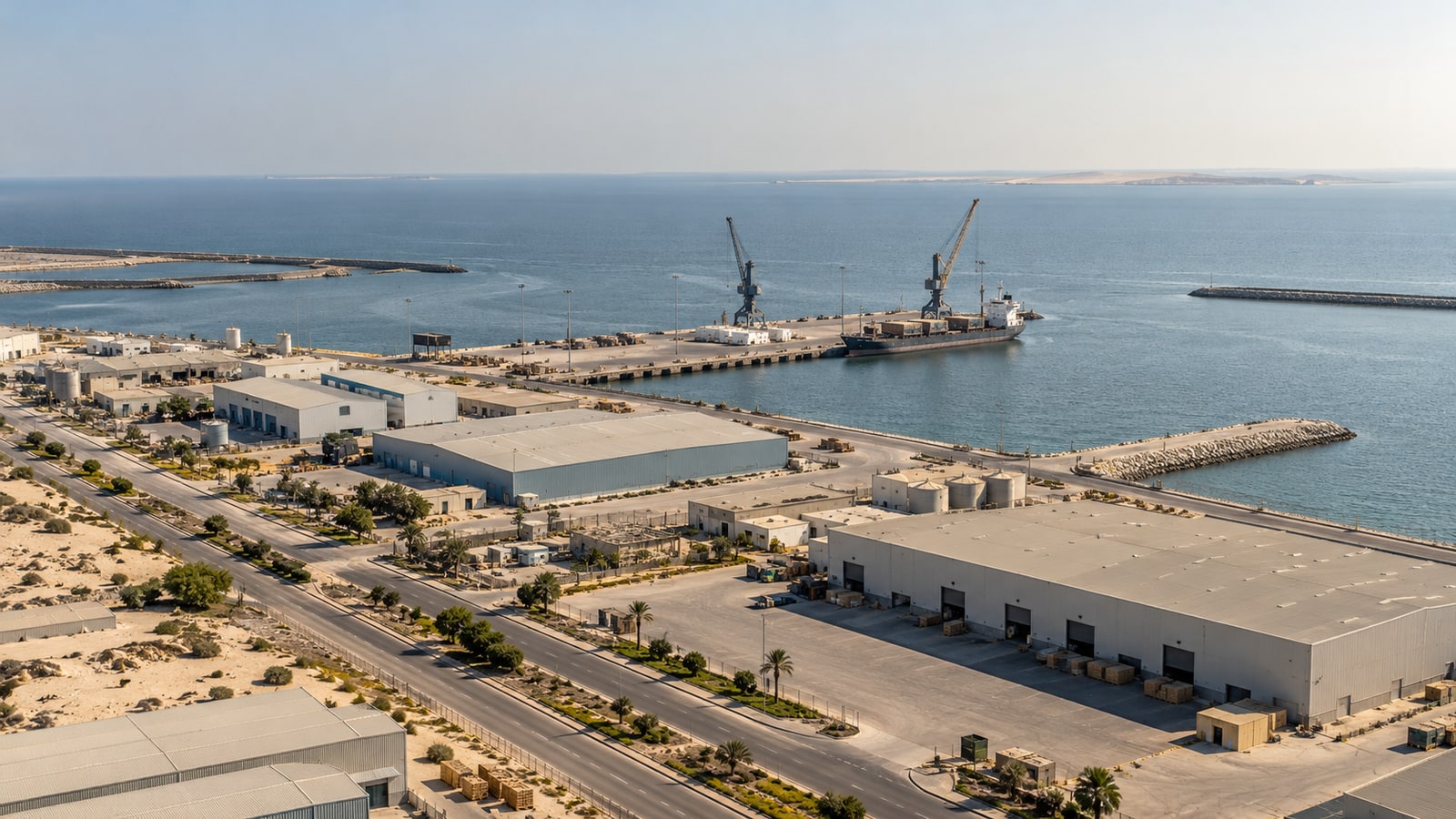
A mature commodity market has a recognisable vocabulary: benchmark prices, delivery points, spreads and contracts that allow participants to compare offers. Where derivatives markets exist, forward prices and hedging instruments can help allocate risk. The question for lower-emissions hydrogen is which of those functions are available for a particular product, location and delivery period.
An indicative index, an auction result and a bilateral forward contract do not establish the same thing as a deep, liquid market. EEX's development of hydrogen price information illustrates progress towards transparency, while also showing why the characteristics of each price signal matter (EEX n.d.).
For a developer, a quoted number is useful only when its product definition, geography, timing and commercial basis are understood.
At OceanBlocks, the strategic question is what allows an energy product to become something a customer can buy with confidence. Chemistry matters, but so do specification, logistics, verification and payment.
A product can be a commodity without having a liquid exchange-traded market. The distinction matters when a project relies on a particular reference price or assumes that its risks can be hedged.
What supports a liquid commodity market
The following are useful conditions to examine, rather than a universal legal definition of a commodity:
- A standard product that buyers accept as interchangeable.
- A way to move it between sellers and buyers at acceptable cost.
- Enough buyers and sellers that no single party dictates terms.
- A reference price that participants trust.
- Contracts and rules that make delivery and settlement predictable.
- Instruments to manage risk, so that producers and consumers can hedge.
The IEA reports that global hydrogen demand exceeded 100 million tonnes in 2025, with industry and refining accounting for almost all use. Low-emissions production reached almost 1 million tonnes. Its 2026 review expected that share to exceed 1 per cent of total production during 2026; the expectation is distinct from the measured 2025 result (IEA 2026).
There is large established demand, but a much smaller low-emissions market.
The role of derivatives
Ammonia and methanol benefit from established shipping and handling infrastructure. That does not make every new supply chain straightforward. Product-specific safety, storage and end-use requirements remain important, and conversion or reconversion must be included in delivered economics (IMO n.d.; IEA 2026).
The IEA's 2021 ammonia roadmap provides a historical account of an industry serving fertiliser and other industrial users. Established chemical demand is a foundation for lower-emissions products, not proof that a new production route meets a particular buyer's requirements (IEA 2021).
Policy is creating additional demand for some products. Under Regulation (EU) 2023/2405, the synthetic aviation-fuel requirement averages 1.2 per cent over 2030–2031, with a minimum of 0.7 per cent in each year. The minimum synthetic share reaches 35 per cent in 2050. These obligations apply within the regulation's defined scope; 1.2 per cent is not an identical annual minimum from the start of 2030 (European Union 2023, Annex I).
My expectation is that derivatives will be important to international trade where their delivered economics and end use are stronger than the alternatives. That is a commercial judgement, not a prediction that every market will follow the same route or that all ammonia, methanol or synthetic fuel is renewable.
Early price signals and demand support
Price information, procurement and public support can each help an emerging market, but they perform different functions.
Three examples illustrate how.
Indices. EEX has published its weekly HYDRIX index since 2023. It averages supply and demand price indications from market participants. The index provides information; it is not itself an executable futures curve or a hedge available to every project (EEX n.d.).
Auctions. H2Global's 2024 pilot result named Fertiglobe as the successful bidder for renewable ammonia, with a maximum contract value of EUR 397 million. The announced terms envisaged supply from 2027, subject to production start and availability, and up to 397,000 tonnes cumulatively by 2033. This is a historical award example, not verification that deliveries have started (H2Global 2024).
Revenue support. The IEA's September 2025 description of Japan's Hydrogen Society Promotion Act explains 15-year price-gap support for eligible domestic and imported hydrogen. Support is conditional on the scheme's requirements; it is not an unrestricted guarantee of profitability (IEA 2025).
These mechanisms can improve price visibility or revenue support in different ways. They do not, by themselves, establish a liquid forward curve.
Why firm offtake matters
An announced production target or an expression of interest should not be treated as contracted demand.
The IEA's 2026 review reports around 1.7 million tonnes of new low-emissions hydrogen offtake agreements in 2025, with only around 20 per cent of newly signed volumes backed by firm contractual commitments. The distinction between an agreement headline and a binding obligation therefore matters to the financing case (IEA 2026).
The NEOM Green Hydrogen Company announcement of May 2023 provides a historical example. Financial close at a total investment value of US$8.4 billion was accompanied by an exclusive 30-year offtake agreement with Air Products for the proposed facility's green ammonia. The example shows the relevance of buyer commitments, not that offtake alone guarantees a successful project (ACWA Power 2023).
The Certificate Is Part of the Cargo
A lower-emissions fuel buyer needs to understand both the physical product and the evidence supporting its environmental attributes.
That makes certification part of the product specification.
EU rules for renewable fuels of non-biological origin, or RFNBOs, include a minimum greenhouse-gas saving and applicable renewable-electricity criteria for electricity-based production. The Commission describes a minimum saving of 70 per cent and rules that also apply to international producers exporting qualifying renewable hydrogen to the EU. Japan's support framework has its own eligibility and accounting requirements. A threshold in one system does not demonstrate compliance with another (European Commission n.d.b; IEA 2025).
Carbon accounting also affects market access. The EU's Carbon Border Adjustment Mechanism entered its definitive regime on 1 January 2026. Hydrogen and fertilisers are among its covered sectors, although the applicable product scope and obligations must be checked for each transaction (European Commission n.d.a).
ISO 19870-1:2026 provides a methodology for greenhouse-gas accounting from raw-material extraction to the hydrogen production gate. It is not a complete downstream transport-to-consumer assessment and does not automatically establish eligibility under a destination market's rules (ISO 2026).
The physical molecule can be identical while its documented environmental attributes and eligibility differ. 'Low-emissions' and 'renewable' should therefore not be used as interchangeable commercial labels.
Producers who design for one rulebook only may find they have built for one buyer only.
How markets develop
One useful way to examine market formation is to look for the following conditions. They can develop at different speeds across products and jurisdictions; they are not a validated sequence through which every market must pass.
- Anchor demand, supported by credible customers, procurement or applicable policy.
- Workable contracts with creditworthy buyers and clear allocation of delivery risk.
- Shared infrastructure where capacity, tariffs, access and governance make it useful.
- Comparable measurement and certification suited to the destination market.
- Reliable price information and, where supported by liquidity, shorter-term trading.
- Appropriate risk-management tools rather than an assumption that all risks can be hedged.
A developer should assess those conditions for the actual product and market. The existence of one does not establish the others.
What This Means for a Developer
For an export project, the practical discipline is to identify the intended buyer, product and destination requirements before treating output as saleable. For an on-site application, the equivalent question is whether the proposed product meets a credible internal industrial need.
That changes the questions asked at the very start:
- Which buyer, in which market, under which certification regime?
- Which derivative will that buyer actually take: ammonia, methanol, fuel or hydrogen?
- Which reference price, auction or contract for difference sets the economics?
- Which port, storage and shipping arrangements make delivery credible?
These are questions OceanBlocks intends to incorporate into opportunity assessment, alongside technology, resource and infrastructure evidence. They describe a development approach, not an existing trading desk or secured commodity sales.
A molecule becomes a commercial proposition when the product, customer, evidence and delivery system fit together.
Forward-looking statements: This article contains forward-looking statements and opinions about markets, technologies and policy. They reflect current views, are not guarantees of future outcomes, and actual results may differ materially. Nothing in this article is investment advice.
References
- ACWA Power (2023). NEOM Green Hydrogen Company completes financial close at a total investment value of USD 8.4 billion. Accessed 3 November 2026.
- European Energy Exchange (EEX) (n.d.). EEX Hydrogen Market. Accessed 3 November 2026.
- European Commission (n.d.a). CBAM definitive regime. Accessed 3 November 2026.
- European Commission (n.d.b). Renewable hydrogen. Accessed 3 November 2026.
- European Union (2023). Regulation (EU) 2023/2405 on ensuring a level playing field for sustainable air transport, Annex I. Accessed 3 November 2026.
- H2Global Foundation (2024). Results of the pilot auction. Accessed 3 November 2026.
- International Energy Agency (IEA) (2021). Ammonia Technology Roadmap: Executive summary. Accessed 3 November 2026.
- International Energy Agency (IEA) (2025). Hydrogen Society Promotion Act (Japan). Accessed 3 November 2026.
- International Energy Agency (IEA) (2026). Global Hydrogen Review 2026: Executive summary. Accessed 3 November 2026.
- International Maritime Organization (IMO) (n.d.). Safety guidelines: future fuels and technology. Accessed 3 November 2026.
- International Organization for Standardization (ISO) (2026). ISO 19870-1:2026: Hydrogen technologies — Methodology for determining greenhouse gas emissions — Part 1: Emissions associated with the production of hydrogen. Accessed 3 November 2026.
OceanBlocks Insights: Energy, markets and industrial value. Editorial edition 1.1. Figures retain their reporting periods. Forecasts, national targets and historical announcements are distinguished from realised outcomes.